

1. Dependency Mapping
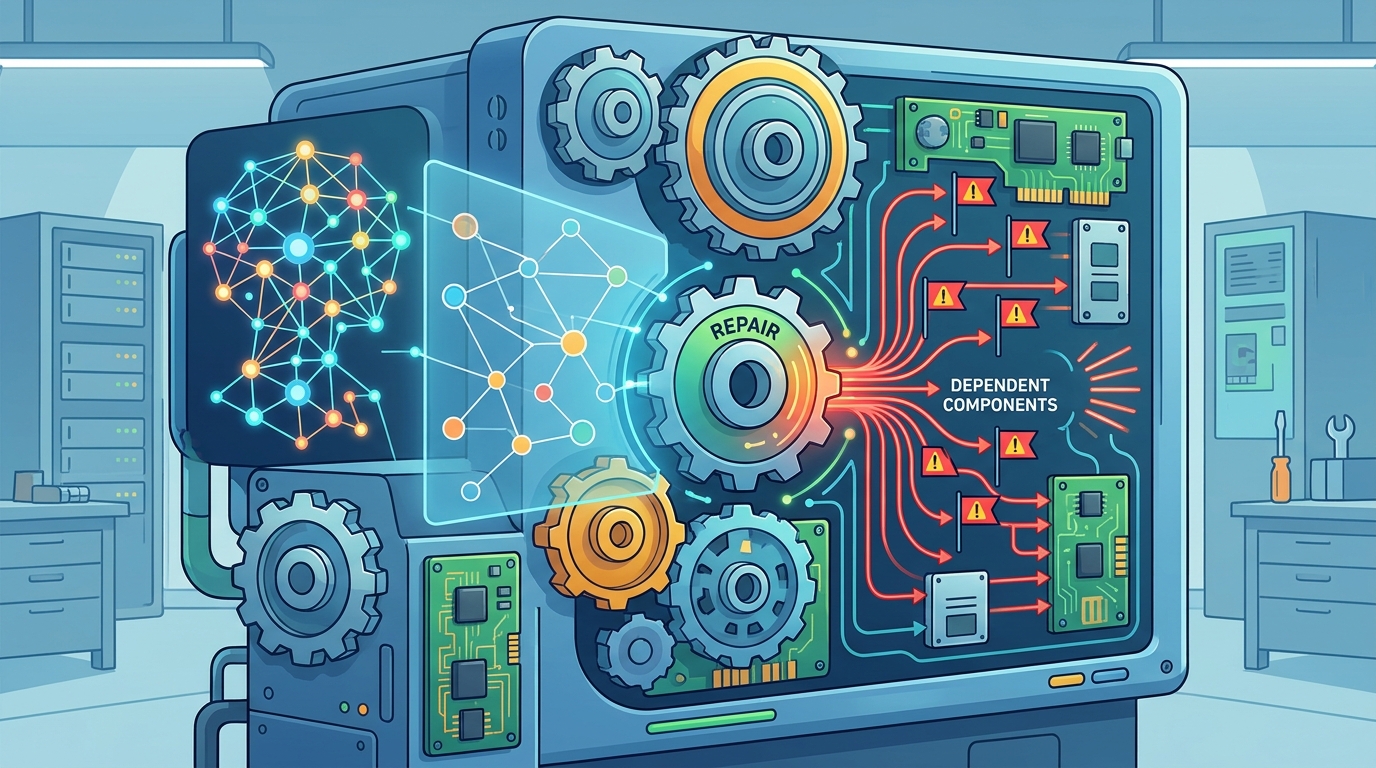
AI builds a graph of how components interact to spot fragile links. Regression detection starts with understanding what relies on what. The system maps relationships between drivers, services, and hardware. If a repair changes a shared library, the AI flags every dependent component. This prevents a fix from isolating a service that other tools require. For additional details, review the FaultFox AI Tech Troubleshooting.
2. State Diffing
Comparing system states before and after a change reveals hidden shifts. State diffing is the process of comparing the configuration of a system at two different points in time. AI tools capture a snapshot of the system before applying a fix. After the change, they compare the new state to the original. Significant deviations in file permissions or registry keys trigger a warning. This method catches subtle changes that do not immediately crash the system but degrade performance over time. For additional details, review the .
3. Simulation and Sandbox Testing
Virtual environments allow AI to test fixes without risking live data. Simulation is the creation of a virtual replica of the target system for safe testing. Before a repair is applied to the live machine, the AI runs it in a sandbox. This environment mimics the user's hardware and software stack. If the fix causes a crash in the simulation, the AI aborts the process. This approach is critical for high-stakes repairs involving operating system files. For additional details, review the Customer Experience.
4. Anomaly Detection
5. Historical Pattern Matching
AI learns from past failures to predict future regressions. Pattern matching involves comparing the current repair scenario against a database of previous incidents. If a similar fix caused a network outage in the past, the AI predicts a high risk. This knowledge base grows with every user interaction. It allows the tool to warn users about specific combinations of software versions that are known to conflict. For additional details, review the Frequently Asked Questions.
6. Formal Model Checking
Logical verification ensures the system satisfies safety constraints. Model checking is a formal method that determines whether a model satisfies a set of logical formulae. In the context of AI repair, this involves verifying that the system state remains within safe boundaries. For example, the AI checks that a firewall rule change does not block essential traffic. This rigorous approach is used in complex system modeling to prevent logical contradictions. For additional details, review the About.
7. Closed-Loop Compensation
Real-time adjustments mitigate the impact of detected regressions. Closed-loop compensation is a control strategy that automatically adjusts system parameters to counteract disturbances. When a repair causes a performance drop, the AI can tweak related settings to restore balance. For instance, if a driver update reduces network throughput, the system might adjust buffer sizes. This creates a self-correcting mechanism that minimizes user disruption.
Choosing the Right Detection Method
Frequently Asked Questions
What is regression detection in AI repair?
Regression detection is the process of identifying when a fix to one part of a system causes unintended failures in other parts.
How does state diffing work?
State diffing compares the system configuration before and after a change to identify unexpected modifications.
Can AI prevent all regressions?
No, AI cannot prevent all regressions, but it can significantly reduce the risk by predicting and mitigating side effects.
What is model checking?
Model checking is a formal verification technique that ensures a system model satisfies specific logical constraints.
Why is simulation important in repairs?
Simulation allows AI to test fixes in a safe virtual environment before applying them to the live system.